
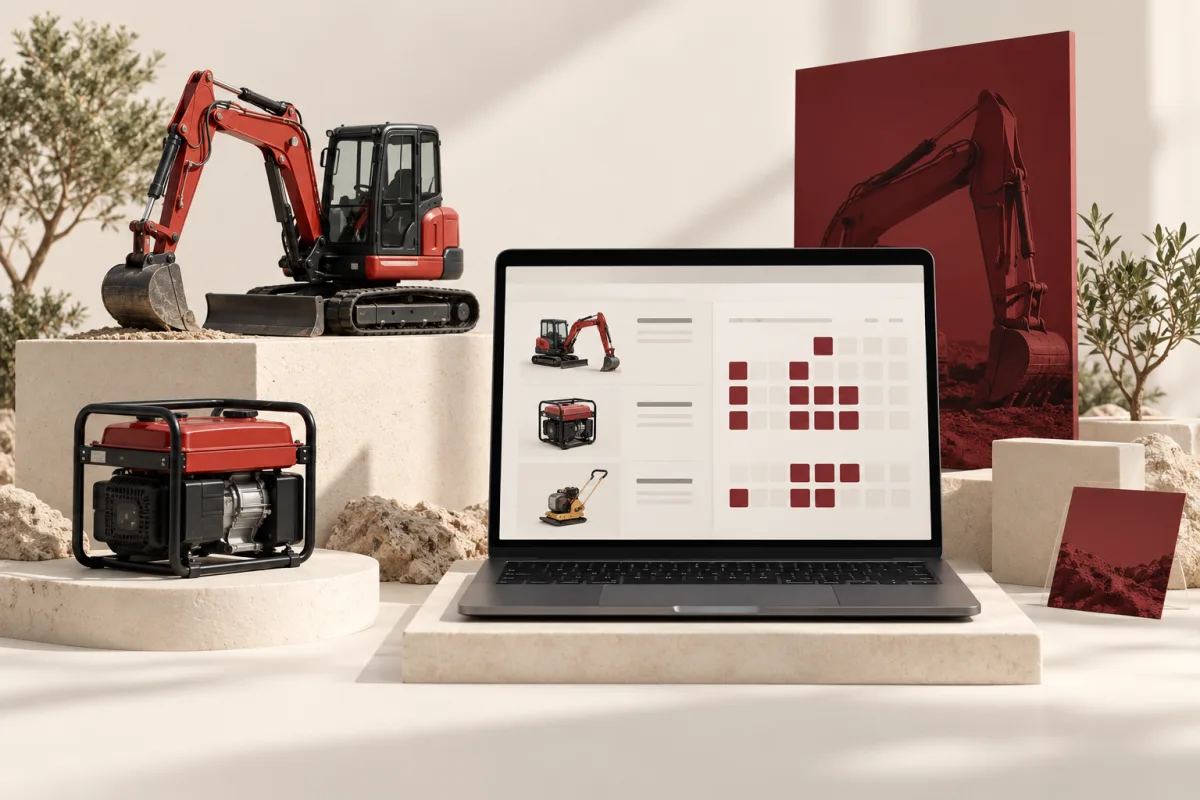
A contractor needs a compact excavator for Tuesday and Wednesday. Your website says “Available,” but it does not ask which depot, whether delivery is needed or when the previous rental returns. The enquiry begins with a promise the yard may not be able to keep.
An equipment rental website should make availability meaningful. Real-time status is valuable only when the reservation, return and maintenance records behind it are dependable.
Show live availability only when the operating system supports the dates, locations and asset states involved. Otherwise use an availability request or clearly qualified indication, followed by an accountable quote and confirmation process.
Help customers find the right equipment
Organise the catalogue by tasks and equipment categories, with accurate specifications, dimensions and relevant attachments. Use approved guidance for suitability and operation; a product page should not invent safety instructions.
Publish the information customers repeatedly request before quoting. If delivery access, power requirements or transport dimensions affect the job, make those details easy to find and confirm through the appropriate process.
Ask for the dates and location before promising stock
A rental is a time interval, not a product quantity. Define pickup and return times, booking cutoffs, buffers and depot rules. Two bookings that touch the same date may still overlap operationally.
Ask whether delivery and collection are needed. If the service area or transport resources require review, explain that the request is subject to confirmation. Avoid an instant checkout that hides an unresolved logistics decision.
Decide what the website can actually confirm
| Availability model | Suitable situation | Required explanation |
|---|---|---|
| Live reservation | Trustworthy asset, date and hold rules | What is reserved and when it expires |
| Availability indication | Useful data with a final review step | What still needs confirmation |
| Quote request | Complex delivery, specifications or pricing | How the team will assess the request |
Do not call a periodically refreshed number real-time. The language should reflect the system, especially when assets can be extended, returned late or taken out of service.
Make the quote request operationally useful
Capture equipment category, dates, location, delivery needs and contact details. Let the customer explain the job without asking them to choose every technical configuration. Review suitability and required accessories before finalising the proposal.
State the commercial terms that need review: hire period, delivery, deposits, additional charges and cancellation arrangements as applicable. Use accurate business-approved wording and show what is included in the quote.
Show equipment and service proof accurately
Use current photographs of the actual equipment range where possible. Stock images should not imply a specific model is in your fleet. Include useful views and condition information appropriate to the sales process.
Show the depot or delivery operation with permission. A reliable explanation of collection and support can establish more confidence than dramatic machinery imagery that tells the customer little about the rental.
Connect the website to the yard
Define which system owns the asset, the reservation and the customer account. Test competing requests, temporary holds, cancellations, extensions and a machine placed into service after a return.
A confirmed reservation should not remain available to another buyer because an integration updates later. If that cannot be controlled, use a request workflow until the connection is ready. The companion guide to equipment rental management software explains the operating records.
Pilot a small catalogue before opening everything
Choose a depot or equipment category and measure successful quotes, reservation conflicts, clarification calls and delivery exceptions. Check mobile use from the customer’s perspective and the staff queue after submission.
Deepak Softech can discuss a rental catalogue and enquiry website connected to a focused operating workflow. Start with a promise the business can keep.
Does every item need online payment?
No. Quote-and-confirm may be more appropriate where logistics, eligibility or equipment configuration need review.
Can availability be shown by equipment type instead of serialised asset?
Yes, if the business has defined how category availability relates to actual deployable units. Test substitutions, holds and service exclusions.
Show us the equipment states and delivery decisions involved. We can plan a website around those actual booking rules.
Plan my rental website ↗Editorial note: published 21 October 2026. Budget and time-saving examples are explicitly illustrative. Vendor capabilities and terms can change; check linked primary sources and written proposals for your requirements.
 Chat with us