
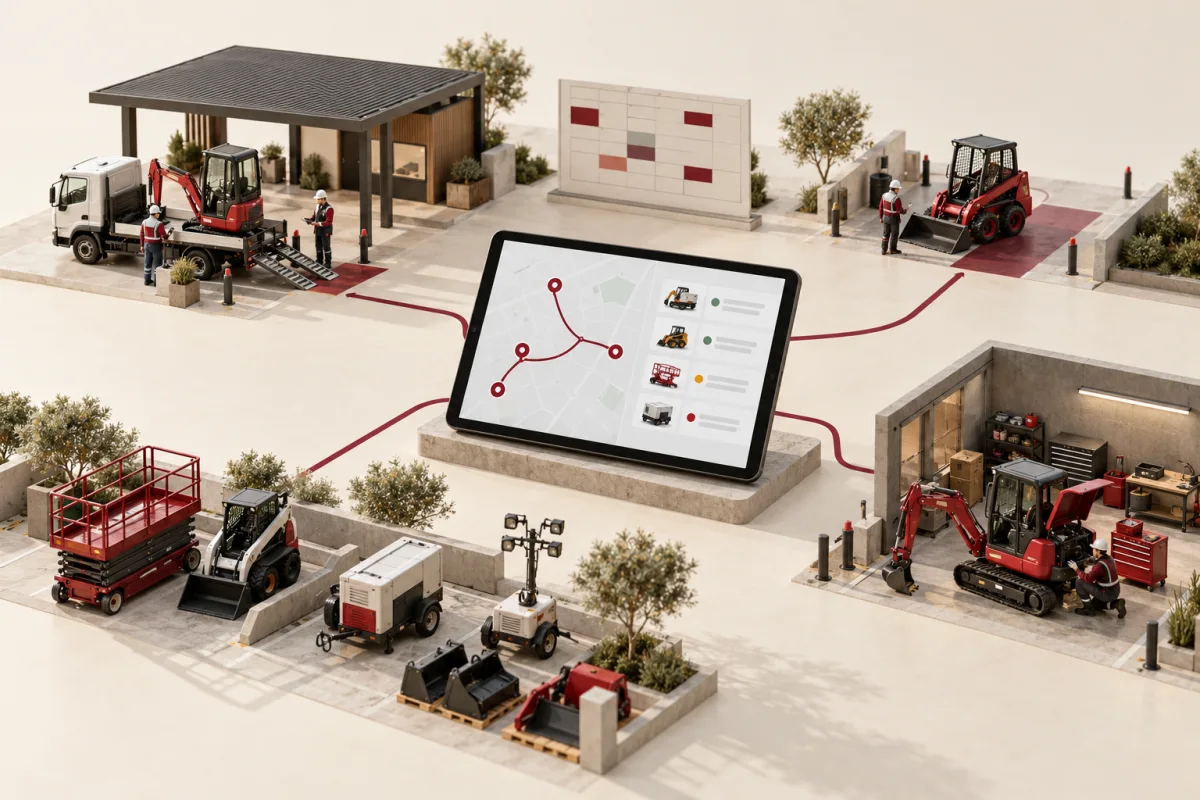
The machine is back in the yard, but it is not ready for the next customer. It needs an inspection, an attachment is missing and the extension on another booking was agreed by phone. “Returned” has become an unreliable synonym for “available.”
Equipment rental management software should connect those states. For a small business, the best first investment may be a trustworthy asset and reservation record rather than a large collection of optional features.
Connect quotes, holds, reservations, dispatch, extensions, returns, inspections and service status. Define which events affect availability and who can change them. Compare existing rental products before commissioning a custom system.
Separate equipment categories from individual assets
A customer may request an equipment category while the yard assigns a particular unit later. Model both levels where the operation needs them. Include relevant attachments, locations and compatibility rules.
Not every item is serialised. Consumables, accessories and bulk stock may need different records. Agree those distinctions early rather than forcing every product into one generic asset form.
Give availability a precise definition
| State | Operational meaning | What should happen next |
|---|---|---|
| Quoted | A proposal exists | Review or accept under defined terms |
| Held | Temporarily protected availability | Expire, release or convert deliberately |
| Reserved | Committed for a defined period | Prepare dispatch |
| On rent | Issued through the agreed handoff | Track return or extension |
| Returned, awaiting check | Physically back but not yet released | Inspect and resolve exceptions |
| Service hold | Excluded from rental | Authorised release when appropriate |
Make time boundaries explicit. Include buffers, depot hours and delivery requirements where they affect the promise. Test simultaneous requests rather than assuming an apparently open slot can only be selected once.
Connect dispatch with a clear handover
Record the asset, accessories, agreed condition information and required documents through the business’s approved process. Use photographs where appropriate and protect access to customer information.
Do not treat software checkboxes as a substitute for equipment-specific safety or professional requirements. The responsible team should define the actual checks and records needed for the equipment and jurisdiction.
Handle extensions before they create a conflict
An extension request should recheck availability, identify affected commitments and follow the agreed approval path. Record the decision and update the customer and staff information consistently.
If a different unit can fulfil the next reservation, make that substitution explicit. Do not silently replace a machine when specifications or customer requirements make the difference important.
Make returns and service visible
Separate physical return from inspection and release. Record missing accessories, condition exceptions and service needs with authorised review. Keep disputed charges or corrective actions tied to the relevant event.
Connect invoices and payments to the system responsible for finance. A custom rental application may need references and approved amounts without becoming a replacement accounting product.
Scope a useful custom first release
Start with assets, reservations, availability rules and the dispatch-return workflow. Add customer self-service, advanced pricing or route optimisation only when the core record is dependable.
Require clear estimates for migration, integrations, devices, training, infrastructure and support. Ask for usable exports and an ownership and handover plan. Compare the result with a configured rental product on the same time horizon.
Prove the operating record before advertising it live
Pilot one asset group. Measure double-booking conflicts, unresolved returns, service holds and time spent answering availability questions. Reconcile the digital states against the actual yard.
Only then connect a real-time availability website with appropriate reservation controls. Deepak Softech can discuss a custom rental workflow and its boundary with existing systems.
Can we start without online reservations?
Yes. A dependable internal record can be the first milestone, with quote requests routed through staff while the website integration is prepared.
Is a calendar enough?
It may work for very simple rentals. As inspections, accessories, extensions and maintenance affect availability, an asset lifecycle becomes more useful.
Show us its bookings, return checks and service decisions. We can discuss a focused system that makes the real status clear.
Map my rental operations ↗Editorial note: published 21 October 2026. Budget and time-saving examples are explicitly illustrative. Vendor capabilities and terms can change; check linked primary sources and written proposals for your requirements.
 Chat with us