
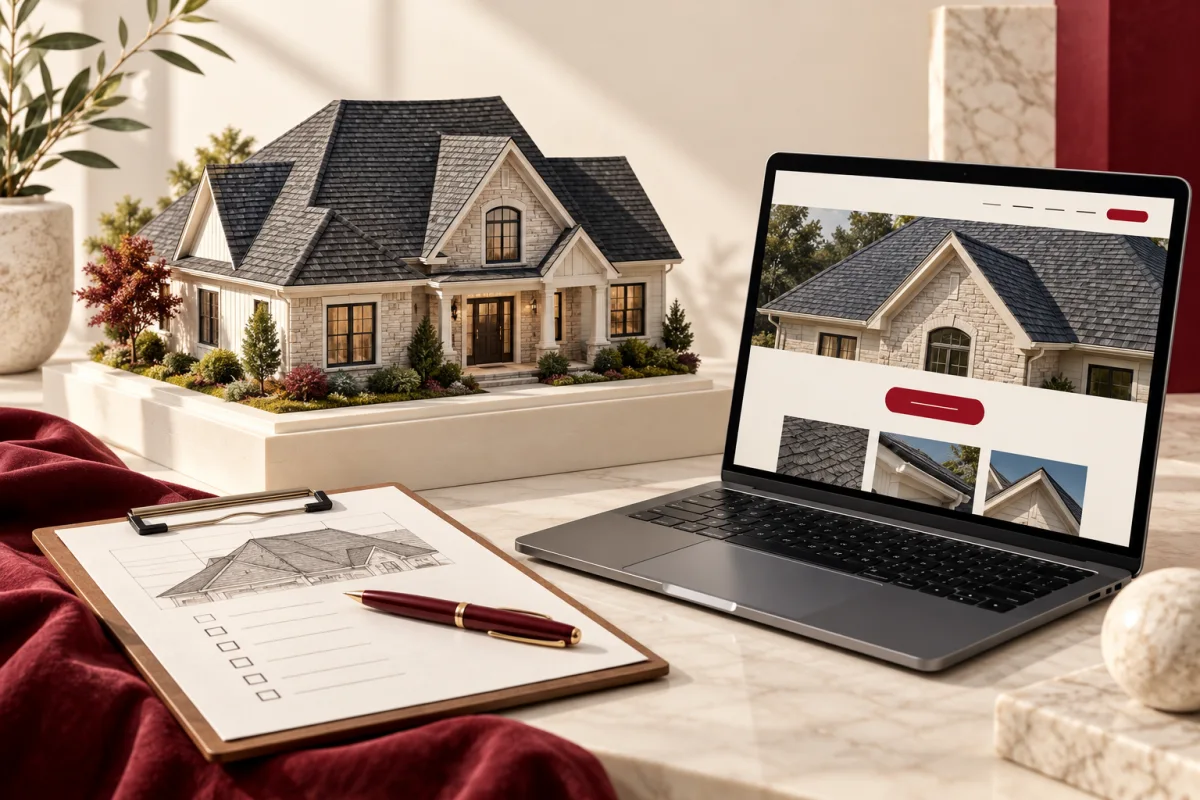
A homeowner notices a ceiling mark after rain. They search for a roofer on their phone, open two websites and look for one thing: a credible way to get the roof checked without starting an unclear sales process.
Roofing website design should make the offer, coverage and next step understandable. If the company genuinely offers free inspections, explain the terms. A stronger design can remove friction, but it cannot guarantee inspection requests or make an unavailable offer true.
Show the services and area covered, relevant project proof, what an inspection involves and how requests are confirmed. Keep the initial form short and connect every enquiry with a responsible person.
Make the inspection offer specific
“Free inspection” needs context. Is it a visual assessment, an estimate appointment or a more detailed report? Are there geographic, property-type or scheduling limits? Explain any conditions prominently and distinguish inspection from repair work.
Do not present an enquiry as a confirmed visit if someone still needs to check the location and schedule. A clear request process can be more credible than an instant-booking interface that overpromises availability.
Help the homeowner identify the right service
Create useful pages for the work actually offered: repair, replacement, maintenance or commercial roofing, for example. Explain suitable situations, materials handled and the process for assessing the job.
Keep storm-related content calm and useful. Avoid implying insurance coverage, approval or a particular outcome. The roofer’s service and any insurer’s decision are separate matters.
Show local proof without manufactured urgency
Use authorised project photographs with a short explanation of the scope. Before-and-after images should represent the actual work and avoid misleading cropping. Include accurate credentials and sourced reviews where available.
A photograph of a recognisable project type can help a visitor assess relevance. Stock imagery can illustrate a roof style but should not be labelled as your team or completed work. Do not invent scarcity timers or claim that a visitor’s roof is unsafe without an assessment.
Give the form a practical purpose
| Initial field | Purpose | Design decision |
|---|---|---|
| Location or ZIP code | Confirm coverage | Explain unsupported areas politely |
| Contact details | Arrange the next step | Use clear consent and contact expectations |
| Property and concern | Prepare the conversation | Offer simple choices and optional detail |
| Preferred timing | Understand availability | Do not imply a reserved slot unless it is one |
If photographs are accepted, validate uploads and state their purpose. Do not ask visitors to climb onto a roof to supply them. The initial journey should make a professional assessment easier to arrange.
Make mobile navigation and contact work properly
Check the menu, call action, form errors and confirmation on a phone. Compress photographs and give images dimensions so the page does not jump as they load. Keep important content visible if an animation fails.
One primary request action is usually easier to follow than several competing widgets. Provide another contact route for someone who cannot or does not want to complete the form.
Connect the request to the estimate pipeline
Capture the enquiry, assign an owner and record whether the appointment was confirmed. After the inspection, track whether an estimate was sent and what follow-up is due. Otherwise the website improves one handoff while the next remains invisible.
The companion guide to a roofing contractor CRM follows the work from enquiry to project closeout. Our CRM development service can be discussed alongside the website when that connection matters.
Know what to measure
Track service-fit enquiries, appointments confirmed, inspections completed and estimates requested or issued. Record why unsuitable enquiries arrive. A large number of clicks can hide poor geographic fit or confusion about the offer.
Keep useful local service content current and base improvements on observed customer questions. A new page title does not substitute for a dependable response process.
Should inspection requests be booked instantly?
Only when the scheduling system can account for travel, service area and the appointment requirements. A request-and-confirm process is appropriate when those details need review.
Can every roofer advertise a free inspection?
Only use that offer if it reflects the business’s actual service and terms. Have the responsible team review the wording and any applicable requirements.
Tell us your roofing services, area and inspection process. Deepak Softech can plan a roofing business website around an honest offer and accountable follow-up.
Discuss my roofing website ↗Editorial note: published 21 October 2026. Budget and time-saving examples are explicitly illustrative. Vendor capabilities and terms can change; check linked primary sources and written proposals for your requirements.
 Chat with us