
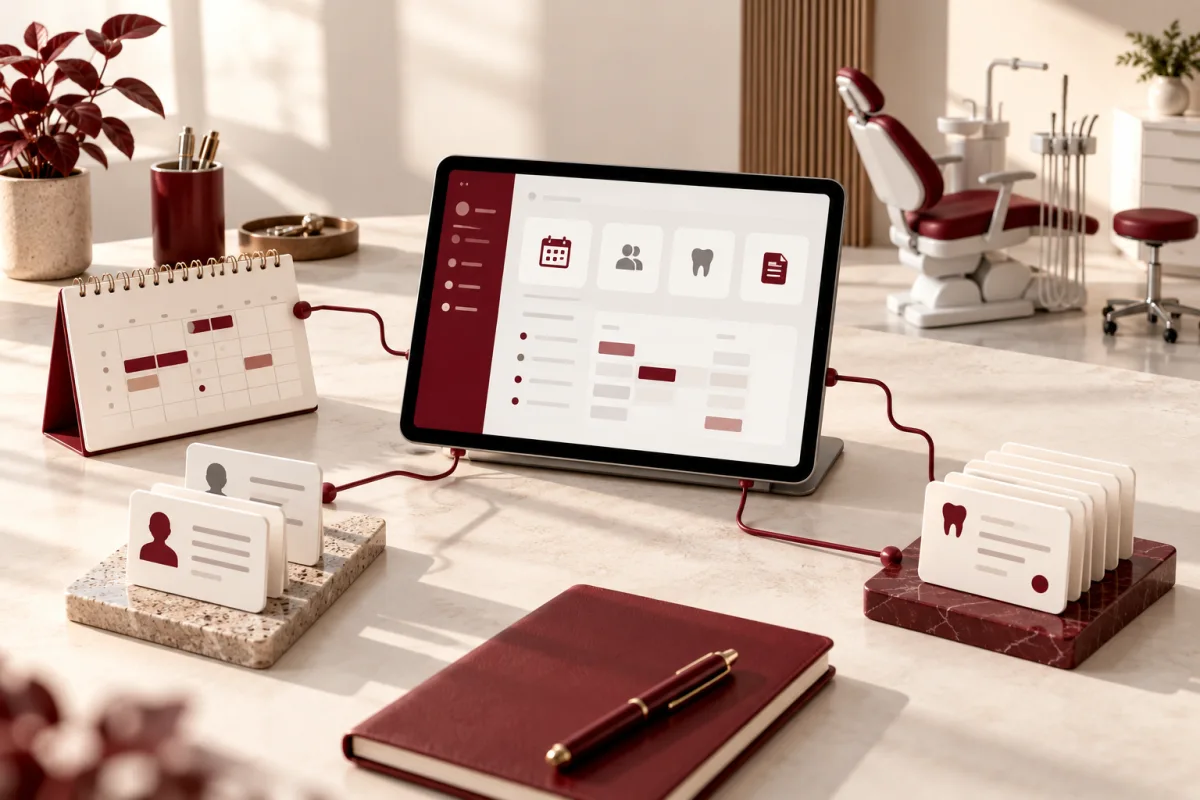
The appointment is booked, but the record is elsewhere. The proposed treatment is in a separate file, the invoice is in another tool and reception asks the same question twice. The administrative burden sits between systems.
Custom dental practice management software should connect those steps without becoming an unnecessary replacement for every clinical tool. Begin with the workflow the practice needs to improve, then examine whether an existing system already supports it.
Define appointment rules, authorised patient records, treatment administration, billing, follow-ups and integrations. Separate administrative features from clinical record requirements and specialist imaging. Cost follows that scope, migration quality and the controls needed to operate it.
What should the first release cover?
Walk through a new patient, a repeat visit, a cancelled appointment and a billing correction. For each, identify the record, responsible role and next action. The interface should make routine work clearer without removing professional judgement.
A focused first release might connect scheduling, patient identification, invoices and follow-up tasks. Specialist charting, imaging integrations, insurance billing or multi-location workflows need explicit evaluation. Do not treat them as minor additions to a calendar.
Features to assess, with the right boundaries
| Area | Useful requirement | Question to settle |
|---|---|---|
| Scheduling | Appointment types, clinician availability and changes | Which slots can patients book themselves? |
| Records | Appropriate history and role-based access | Which system owns the clinical record? |
| Billing | Invoices, payments, balances and corrections | What remains in accounting? |
| Follow-ups | Owned tasks and approved reminders | Which messages are appropriate to send? |
| Reporting | Agreed administrative measures | How are cancellations and payments defined? |
Permissions must reflect how the practice works. Reception, clinicians, administrators and external support do not necessarily need the same information or actions. Test those differences rather than relying on role names.
Illustrative development budget scenarios
For early discussion, the following USD figures are editorial planning allowances—not market survey averages, packages or Deepak Softech quotations.
- $15,000–$35,000: a narrowly defined administrative application with limited integration and migration.
- $35,000–$80,000: a more connected practice workflow with several roles, reporting and selected integrations.
- $80,000+: extensive multi-location, migration, specialist record or integration requirements can increase effort substantially.
Exclude assumptions rather than hide them. Ask suppliers to identify hosting, support, message usage, data cleanup, training and specialist reviews separately unless included. Replacing clinical records or integrating imaging can change both scope and delivery responsibilities.
Compare custom with an existing practice system
A standard dental product may offer established functionality that would be expensive to recreate. Demonstrate your real scenarios first. Custom work is more defensible when important administrative rules or connections cannot fit sensibly through configuration.
Deepak Softech’s Clinzify offering is a starting point for discussing appointments, records, prescriptions, billing and reporting. Confirm the dental-specific features, deployment and controls your practice needs instead of assuming every clinical workflow is covered.
Protect the data and the migration
For US regulated practices, the HHS Security Rule summary explains safeguards for electronic protected health information. Applicability, contracts, configuration and ongoing responsibilities need appropriate review. Other locations have their own requirements.
Rehearse migration with an approved sample. Decide how duplicates, incomplete histories, attachments and corrections are handled. Have authorised practice staff verify the result and define access to the old system during transition.
Run a pilot that includes awkward cases
Test rescheduling, partial payments, cancelled invoices, incorrect patient matches and restricted access. Measure administrative task time, duplicate records, unresolved follow-ups and staff support needs. Do not infer clinical outcomes from faster administration.
Connect the public website only after the confirmation process is dependable. The dental booking website guide covers that patient-facing promise.
Does custom software remove recurring charges?
No. Infrastructure, maintenance, monitoring and third-party services can still cost money. Include them in the ownership model.
Can we replace everything in one launch?
It may be possible, but a phased transition can expose problems earlier. Choose the approach around continuity of practice operations and the risk of the actual migration.
Using anonymised examples, show us the record changes and handoffs. We can discuss a healthcare software scope and the requirements that drive its cost.
Discuss my dental software scope ↗Editorial note: published 21 October 2026. Budget and time-saving examples are explicitly illustrative. Vendor capabilities and terms can change; check linked primary sources and written proposals for your requirements.
 Chat with us