
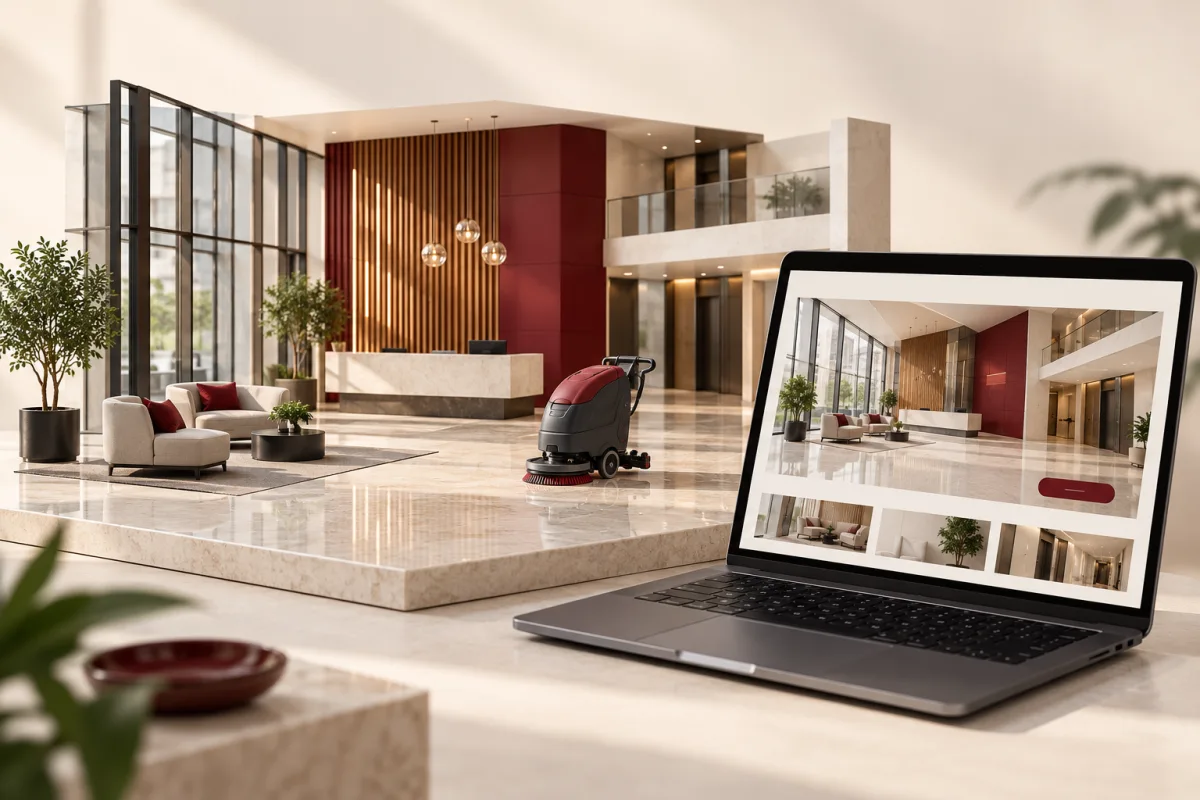
A facilities manager needs a new cleaning contractor before the current agreement ends. They open your website between meetings. “We make spaces sparkle” tells them very little about whether your team can handle a three-floor office after 6 p.m.
Cleaning company website design becomes commercially useful when it answers the questions behind a quote. The aim is not more form submissions at any cost. It is an enquiry your estimator can turn into a sensible conversation.
Clear service positioning, distinct service pages, relevant proof, a workable quote form, an explained walkthrough process, usable mobile contact and reliable enquiry routing. Treat these as parts of one customer journey.
1. Say what you clean and where
Commercial offices, medical facilities, industrial spaces and residential properties have different buying needs. Make your actual specialisms obvious. Publish the service area and explain relevant operating details such as evening work or recurring contracts when genuinely available.
Lead with the customer’s situation rather than a long equipment list. “Recurring office cleaning across this service area” gives someone a useful starting point. Specialist claims should be supported by the training, process or credentials they imply.
2. Give important services their own pages
A buyer comparing office cleaning needs different information from someone arranging a post-construction clean. Separate the pages when you have enough useful content: scope, suitable property types, scheduling considerations and how quotes are prepared.
Do not create dozens of city pages by changing a place name. Explain genuine coverage and relevant local work. Thin repetition makes the site longer without helping the buyer.
3. Show proof that resembles the prospect’s building
Use project photographs with permission, an accurate description of the property type and identifiable feedback where available. A real office-cleaning example is more persuasive to an office buyer than a generic photograph of a spotless kitchen.
Only publish client names, logos, access details or photographs when authorised. Stock images can support the visual tone but should not be presented as your staff, equipment or customer sites.
4. Build a quote form your estimator can use
| Ask initially | Why it helps | Leave for the follow-up |
|---|---|---|
| Property type and location | Coverage and service fit | Detailed access instructions |
| Approximate size | Initial scoping | Verified measurements |
| Frequency and preferred timing | Operational suitability | Final staffing plan |
| Contact and main concern | A relevant response | Keys, codes and sensitive security details |
Keep estimates and confirmed prices distinct. If a site visit is needed, say so before submission. Do not force visitors to supply information they cannot reasonably know just to start a conversation.
5. Explain the walkthrough and proposal process
Show what happens next: enquiry review, a conversation or walkthrough, scope confirmation and a proposal. State response expectations only if the business can consistently meet them.
This detail lowers uncertainty without promising a result. It also helps the estimator receive a better-prepared prospect. Add a short checklist of useful details, such as current cleaning frequency and the areas causing concern.
6. Make the mobile experience dependable
Test call controls, the form, service navigation and error messages on a real phone. Optimise photographs and avoid reveal effects that leave important content blank. The main action should remain easy to find without covering the page with pop-ups.
Offer a phone or email alternative where appropriate. A visitor should not have to use a chat widget to learn whether you cover their property type.
7. Route enquiries to an accountable owner
A successful browser message is only the beginning. Confirm that the estimator receives the enquiry, knows the next action and can see previous contact. Track duplicate requests and handoffs between sales and operations.
If the job becomes a recurring contract, the information should flow into the working schedule. The companion guide to cleaning scheduling software explains that operational connection.
Judge performance by the quality of the conversation
Measure suitable enquiries, walkthroughs arranged, proposals issued and reasons work does not proceed. Separate irrelevant requests and spam. Traffic growth without service fit can waste the estimator’s time.
Deepak Softech’s portfolio includes business website work you can review for presentation and enquiry journeys. Ask what the project involved rather than inferring commercial results from screenshots.
Should the site show cleaning prices?
Explain what drives the price and publish genuine starting terms only if they can be honoured. Variable commercial sites often need a scoping conversation or walkthrough.
Tell us your cleaning services, coverage and how an enquiry reaches your estimator. We can plan a business website around that journey.
Discuss my cleaning website ↗Editorial note: published 21 October 2026. Budget and time-saving examples are explicitly illustrative. Vendor capabilities and terms can change; check linked primary sources and written proposals for your requirements.
 Chat with us